
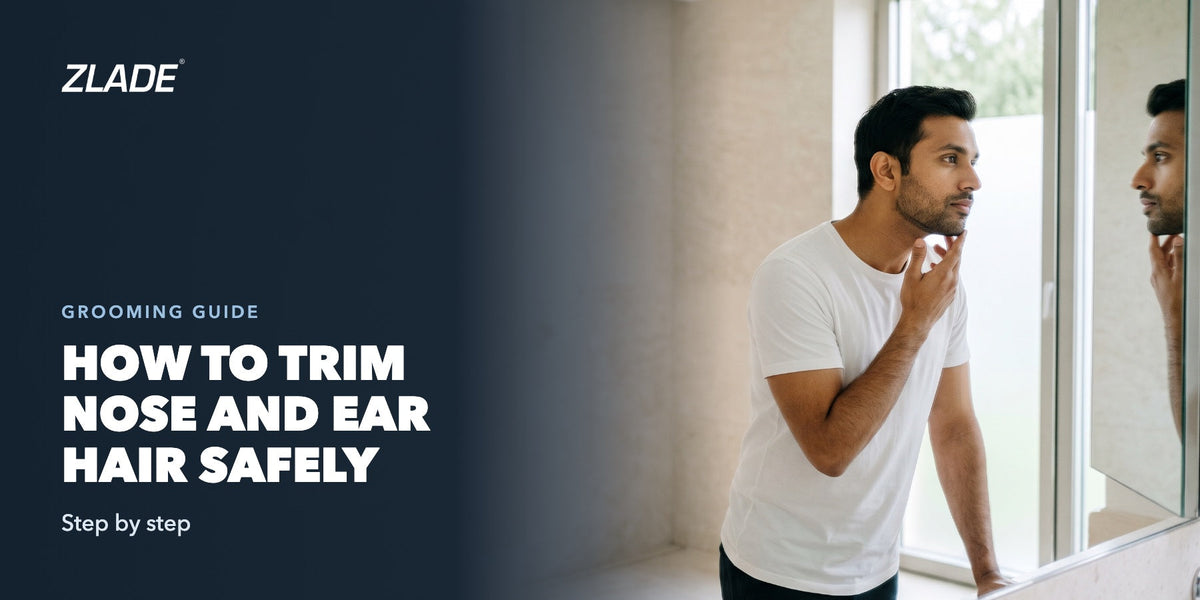
Fit the nose head, switch it on outside your nose, and hold only the tip at the nostril opening. Trim the hair you can see in the mirror and leave the rest. For ears, stay on the outer ear and around the opening, and keep the trimmer out of the ear canal. It takes a couple of minutes, and most men need to do it every two to three weeks.
What you need
- A trimmer with a nose and ear head, charged.
- A mirror and good light. Daylight from a window works.
- A few tissues.
Blow your nose first. A clear, dry nostril is quicker to trim and the head is less likely to clog.
How to trim nose hair: step by step
- Fit the nose head and switch the trimmer on before it goes near your nose.
- Tilt your head back and lift the tip of your nose with one finger so you can see the opening in the mirror.
- Rest only the tip of the head at the nostril entrance. If you feel it press against anything, ease back.
- Move it slowly in small circles around the inner rim for a few seconds. Do not press it into the skin.
- Take it out and check the mirror. Go back in only where hair still shows.
- Do the other nostril the same way.
- Blow your nose or use a tissue to clear the clippings.
How far in to go
Only as far as the entrance. If a hair does not show when you look straight into the mirror, nobody facing you can see it either, so leave it. The hair further in catches dust before it travels deeper. Pushing the head in to chase it makes no difference to how you look and is the usual reason the inside of the nose ends up sore.
If the trimmer pulls instead of cutting
This is the most common complaint about nose trimmers. A snagging, tugging feeling usually has an ordinary cause. Check these in order:
- Low charge. A tired motor slows down and catches hair without cutting it cleanly. Charge fully and try again.
- A clogged head. Cut hair and mucus build up under the guard. Clean it as described below.
- Moving too fast. Quick jabs drag the hair. Slow down and give the cutter a moment on each spot.
- Switching on inside the nostril. Start it outside, every time.
If a clean, fully charged trimmer still pulls, contact customer care before you keep using it.
How to trim ear hair: step by step
- Look at both ears in a mirror, or feel with your fingers. Ear hair usually grows on the outer rim, the lobe and the small flap in front of the opening. A hand mirror helps with the back of the rim.
- Switch the trimmer on and gently pull the top of your ear outwards to flatten the skin.
- Run the head lightly over the outer ear and around the opening. Keep it outside.
- Go over longer hairs on the rim or lobe once more from a different angle.
- Wipe the ear with a tissue or a damp cloth.
Nothing goes into the ear canal. If hair or wax deep inside is bothering you, see a doctor.
Cleaning the nose and ear head
Clean it after every use. Hair and mucus left in the head dry there and make the next trim harder.
- Switch the trimmer off and remove the head.
- Tap out loose hair, or use the cleaning brush if your kit has one.
- Rinse it under the tap only if your trimmer has a water-resistance rating and your manual says the head can be rinsed. Otherwise, brush it dry.
- Let it dry fully before you fit it back or put it away.
Use this head for nose and ears only, and keep it to yourself.
How often to trim
Every two to three weeks suits most men. Some need it weekly, others manage monthly. Go by the mirror and trim when hair shows at the nostril or on the outer ear.
If the inside of your nose is sore from a cold, a cut or a pimple, wait until it settles.
Why trim rather than pluck
Plucking pulls the hair out by the root. Inside the nose that hurts more than most people expect, your eyes will water however composed you are, and the skin can stay sore for a day or two. Trimming cuts the hair above the skin and leaves the root alone, so done properly it should not hurt, and the hair that remains keeps catching dust.
Round-tipped scissors will do at the very edge of the nostril if you can see clearly. A nose trimmer head is easier to control because the cutter sits behind a guard, which makes it harder to catch the skin.
Zlade trimmers with a nose and ear head
These Zlade kits include one:
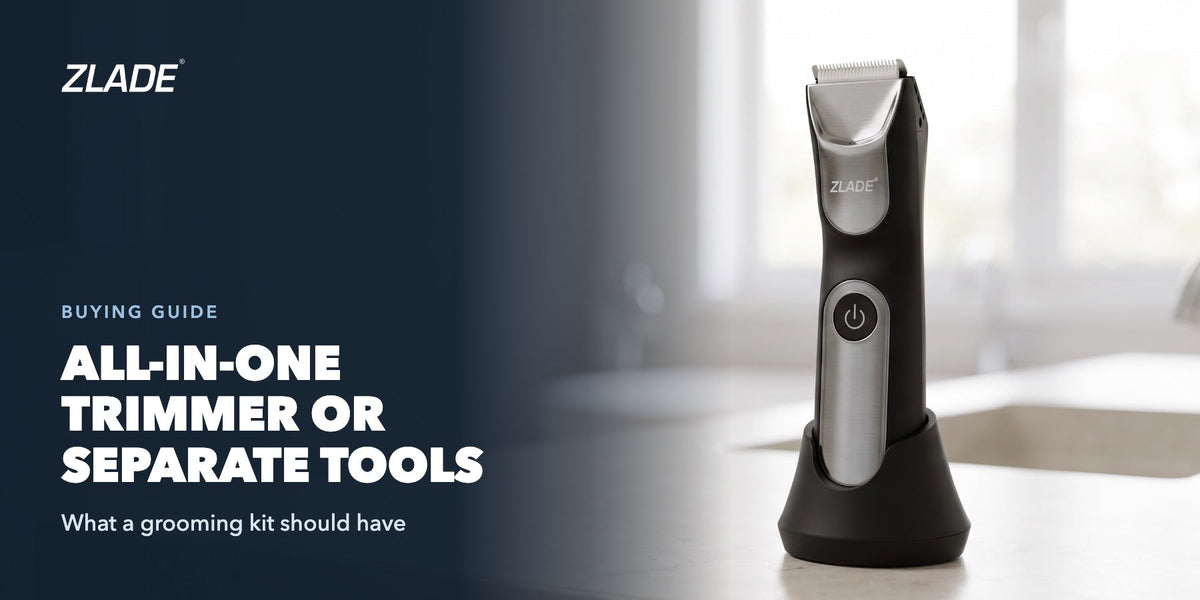
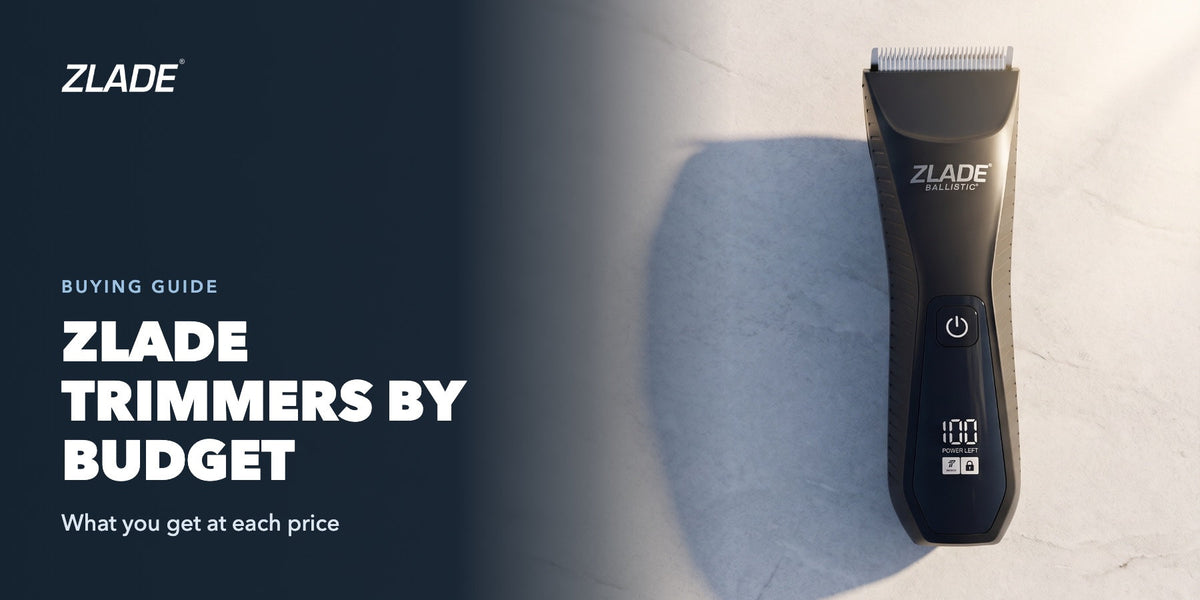
- Ballistic Pro Max: an all-in-one with a body trimmer, a nose and ear unit and a foil shaver unit. IPX-7 rated, about 90 minutes of runtime.
- Ballistic Neo: a body trimmer, a foil shaver unit and a nose unit that also does ears. IPX-5 rated, about 90 minutes of runtime.
- Jaws Blitz all-in-one kits: beard trimmers that add a precision blade and a nose and ear trimmer. See the beard trimmers and grooming kits collection. No water rating is stated for Blitz, so clean that head dry unless your manual says otherwise.
- Summer Move: the women's all-in-one, with a nose head alongside body and bikini, face and eyebrow heads. IPX-5 rated.
FAQs
Is it safe to trim nose hair?
Yes, as long as you stay at the nostril opening and use a guarded nose trimmer head. Skip it while the inside of your nose is sore or cut.
Is trimming better than plucking nose hair?
For most people, yes. Trimming leaves the root alone, so you avoid the sharp pain and watering eyes that come with plucking, and enough hair stays in place to filter dust.
Why does my nose trimmer pull hair?
Usually it is a low battery, a clogged head, moving too quickly or switching on inside the nostril. Charge it, clean the head, start it outside your nose and move slowly.
Can I use a beard or body trimmer for nose hair?
Not the main blade. It is too wide for a nostril and has no guard for the inside. Use a dedicated nose and ear head.
Can I trim hair inside the ear canal?
No. Trim the outer ear and around the opening only. See a doctor about hair or wax deeper in.
Will nose hair grow back thicker after trimming?
No. Trimming does not touch the root, so it cannot change how the hair grows. The cut end is blunt, which can feel a little coarser, but the hair itself is the same.
Related
- All-in-one trimmers
- Beard trimmers
- Body trimmers for men
- Ballistic Pro Max vs Neo
- Which Ballistic trimmer should I buy?

Leave a comment
This site is protected by hCaptcha and the hCaptcha Privacy Policy and Terms of Service apply.